How Much Does It Cost to Build a Custom Home in Oregon on Your Own Land?
A grounded planning guide for Oregon landowners comparing site costs, design decisions, utilities, engineering, permitting, and budget alignment before building a custom home.
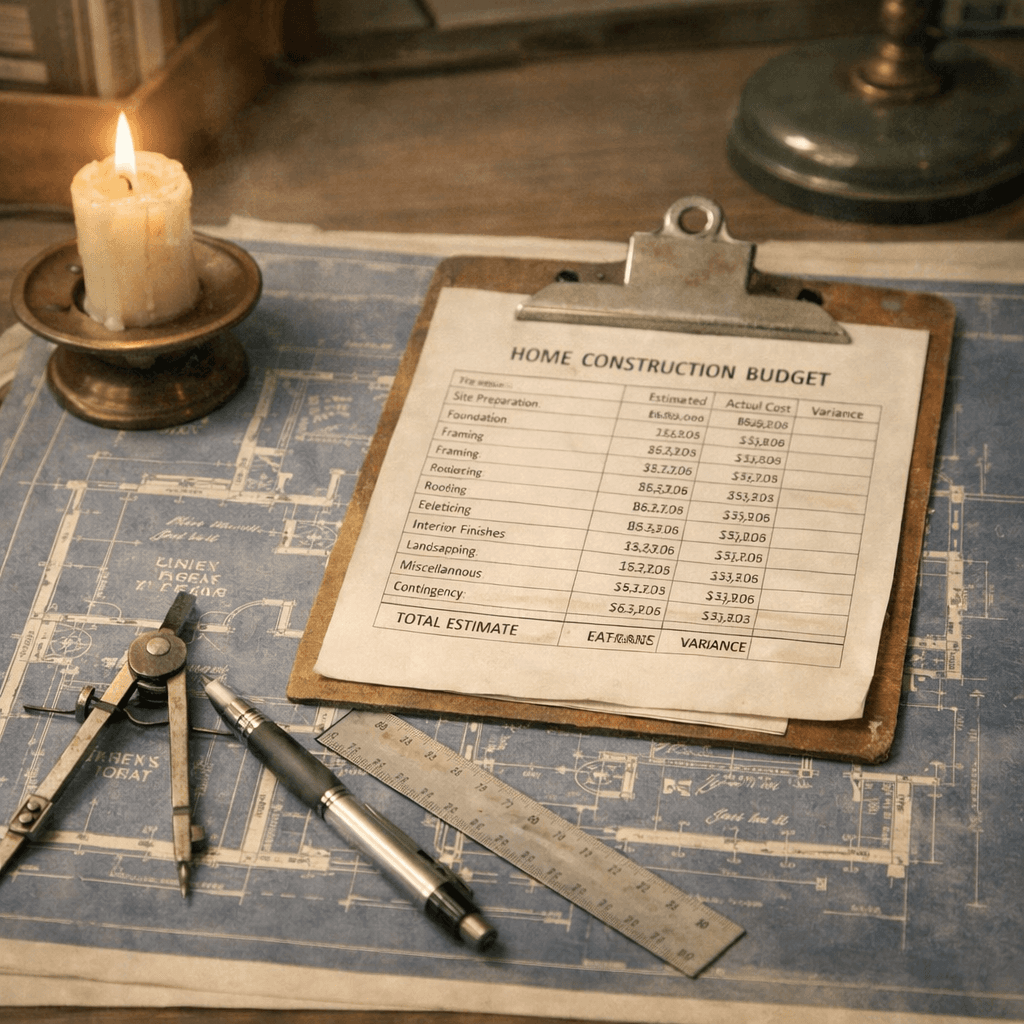
If you already own land in Oregon, one of the first questions you are likely asking is: How much will it cost to build a custom home here?
It is a fair question, but it is usually asked the wrong way. Most people start by looking for a cost per square foot number. The problem is that custom home costs can vary dramatically based on the land, the design, the level of finish, and the decisions made before construction ever starts.
A better question is this: after accounting for the cost of the site, what kind of home can you realistically afford to build on your land? That is the question that leads to better decisions.
Custom home cost in Oregon varies widely. The biggest drivers are site development, utilities, design complexity, finish level, and how efficiently the home is planned.
At Masterwork, we believe the best custom home designs start by understanding four things clearly: your overall budget, your site costs, your must-haves, wants, and nice-to-haves, and the way you actually want to live on the land.
When those are brought together well, the result is not just a beautiful home. It is a home that fits the property, fits the budget, and captures as many of your priorities as possible.
The Truth About Custom Home Cost in Oregon
There is no universal number that tells you what your home will cost. Two homes with the same square footage can have very different construction costs depending on several conditions.
- How difficult the site is to build on
- Whether power, water, sewer, or septic are already in place
- The driveway length and access conditions
- The complexity of the rooflines and structure
- The amount of glass, vaults, decks, and detailing
- The finish level inside the home
- Whether the design is compact and efficient or spread out and expensive to build
This is why cost per square foot should be treated as a rough reference only, not as the foundation of your planning.
Start With the Cost of Getting Out of the Ground
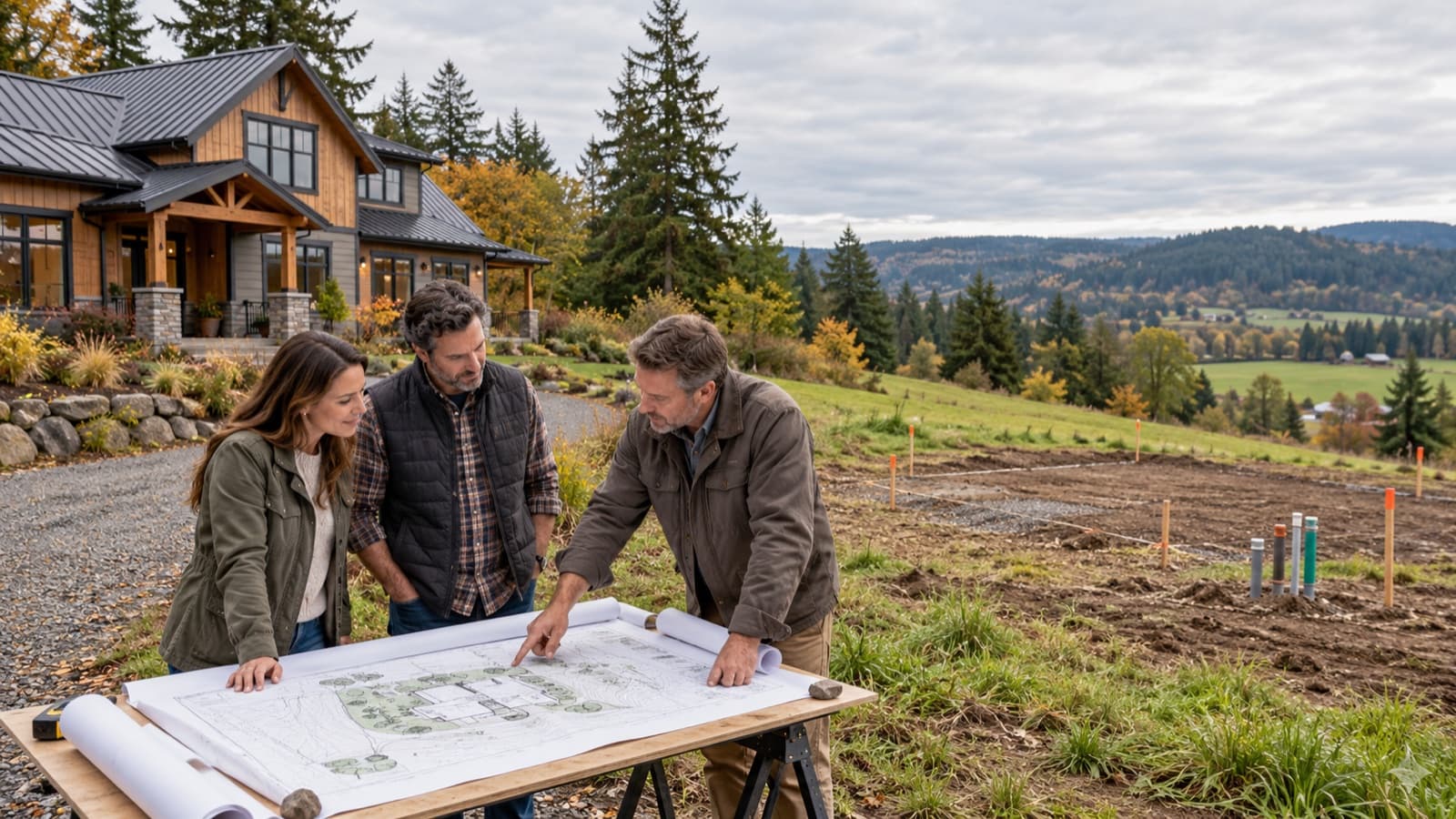
Before you focus too much on the house itself, look first at the cost of making the site buildable. In many cases, the biggest budget surprises happen before framing even starts.
The top items to evaluate early are usually access and driveway, power, water, and sewer or septic.
Access and driveway
Can crews and materials reach the homesite easily? Will you need a long driveway, major grading, retaining, or culverts? What changes to access will the fire department require? Are there easement and access hurdles to overcome?
A site with difficult access can add significant cost before the house itself even begins.
Power
How close is power to the homesite? If the service is a long distance away, trenching, poles, transformers, and utility coordination can become a major line item. Start the conversation early with the local utility provider because design and cost estimates can take months.
Water
Is the property served by city water, a shared system, or will it need a well? If a well is needed, that adds uncertainty because drilling depth, yield, pump requirements, storage, and treatment can vary from site to site.
Sewer or septic
If sewer is available, the connection may still require fees, trenching, and utility work. If septic is required, the site needs to be evaluated for suitability and installation requires permitting.
These four categories often tell you more about what you can afford than a generic square-foot number ever will.
The Site Cost Drivers That Matter Most
Once the utilities and basic access are considered, the next major cost drivers are usually tied to the land itself.
Slope and grading
Flat, accessible sites are generally simpler and less expensive to build on. Sloped sites can be beautiful, but they often require more excavation, more engineering, more retaining, more drainage planning, and more complex foundation work.
Soil and foundation conditions
Some sites need overexcavation, engineered fill, drainage upgrades, retaining walls, or more specialized foundation solutions. These conditions affect the budget early and can change the design approach.
Clearing and prep
Trees, brush, demolition, rock, and site cleanup all matter. Even before construction starts, the property may need substantial prep work to be ready.
Jurisdictional constraints
Setbacks, overlays, driveway requirements, wildfire zones, floodplain issues, and land-use constraints can all impact what can be built and how much it costs to get there.
It is important to bring in a professional with design and building experience to help explore site conditions, identify potential issues, and work through requirements before settling on a home design that may not be approved due to site constraints.
Next Focus on the House Itself
Once you understand what the site will take, it becomes much easier to design the right home. Homeowners need to stop asking only how big a home they can build and start asking what kind of home they should build on this land with this budget.
A thoughtful design process should help you rank your priorities as must-haves, wants, and icing on the cake.
Must-haves
These are the things the home truly needs in order to work for your life: bedrooms, main-level primary living, home office, mudroom, covered outdoor living, functional kitchen layout, or garage size.
Wants
These are valuable features, but not absolute deal-breakers: a bonus room, larger pantry, vaulted great room, extra garage bay, freestanding tub, expanded outdoor kitchen, or butler's pantry.
Icing on the cake
These are features that are nice if the budget allows, but should not drive the project early: specialty ceilings, large walls of glass beyond what the site calls for, luxury appliance upgrades, highly customized detailing, extra square footage without a clear lifestyle benefit, or hard-wired technology upgrades.
This ranking matters because every design decision has a cost consequence. Good design is not just adding rooms. It is choosing where the budget should work hardest.
The Square-Footage Trap
One of the biggest mistakes homeowners make is assuming square footage alone determines affordability. It does not.
A larger but simpler home can sometimes be more affordable than a smaller home with complex roof forms, lots of corners and offsets, long spans, large custom windows, tall ceilings throughout, extensive built-ins, luxury kitchen and bath specifications, or difficult site conditions.
Square footage still matters, but it is only one variable. A better goal is not simply to shrink or enlarge the house. It is to make the house more efficient, more buildable, and more aligned with how you actually live.
Do Not Forget Engineering, Permitting, and Professional Costs
A realistic budget should include more than just the builder's base construction number. Other major costs often include engineering, permitting, septic and well review, and design coordination.
Structural engineering is commonly required, especially when site conditions, spans, loads, or architectural expression demand it. At Masterwork, engineering and truss design are coordinated as pass-through services rather than marked up internally.
Permit costs vary by jurisdiction, project valuation, and local requirements. If the property is not already served, approvals, testing, permits, and installation can become a meaningful part of the total cost picture.
A well-led design process has real value because it helps reduce expensive surprises, avoid wasted square footage, and make the house fit the site and the budget more intelligently.
Why Pre-Approval Matters Early
Before serious design work begins, it is wise to get a solid sense of your financing capacity. A mortgage preapproval letter helps establish a realistic working budget. It is not a guaranteed loan offer, but it helps establish context for design decisions.
When clients know their rough financial range, the design process becomes more productive. Instead of designing blindly and cutting later, you can begin by aligning the home with the overall budget, site development costs, needs versus wants, and the realities of the land itself.
So What Can You Afford to Build?
The best way to answer that is usually not by chasing one statewide number. It is by working through the budget in the right order.
- Establish your rough total budget with lender conversations, available cash, and your real comfort level.
- Estimate the site-development burden, including access, power, water, sewer or septic, grading, and site prep.
- List your must-haves, wants, and nice-to-haves so the design process stays focused when tradeoffs appear.
- Design around the budget, the site, and your lifestyle together.
- Refine the concept before full construction documents so feasibility work can test direction before overcommitting.
What the Best Custom Home Designs Actually Do
A great custom home design does more than look good on paper. It creates alignment between the land, the budget, the site costs, the household's daily life, and the priorities that matter most.
When those pieces are aligned, the home feels right because it is right. It belongs on the property, reflects the way the owners live, respects the budget instead of fighting it, and avoids the common trap of designing first and asking hard cost questions too late.
Final Thought
If you are trying to figure out what it costs to build a custom home in Oregon on your own land, start by reframing the question. Do not ask only what the cost per square foot is. Ask what kind of home can be built well after accounting for the real cost of the land, the site work, and the priorities that matter most.
At Masterwork, that early stage is about bringing clarity to the whole picture: your goals, your site, your budget, and the tradeoffs required to design a home that fits all of them well. The best projects are not driven by square footage alone. They are driven by alignment.
Ready for the Next Step?
If you already own land, or are under contract on a property, the right place to begin is with clarity. Masterwork's Foundations Consultation is designed to help you evaluate your site realities, budget alignment, priorities, and next steps before you move too far into drawings or construction decisions.