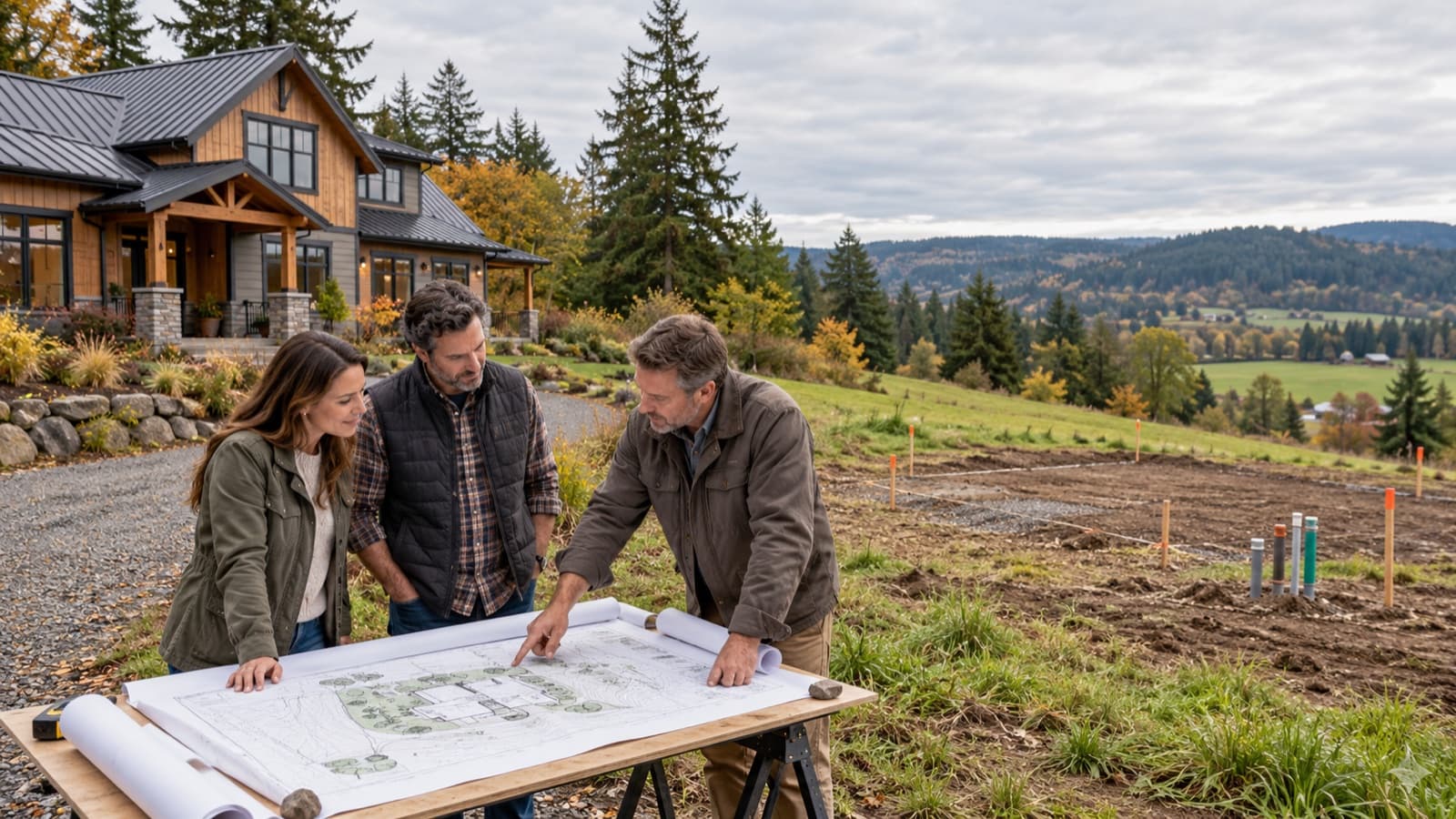
Most homeowners do not realize how much of their project is decided before construction ever begins.
After more than 25 years working in both residential design and construction, I have seen the same pattern repeatedly: projects that start with vague or disconnected planning almost always lead to costly changes, delays, or compromises later on.
I have been on job sites where framing had to be reworked because of decisions made on paper months earlier. Those moments are expensive and almost always preventable.
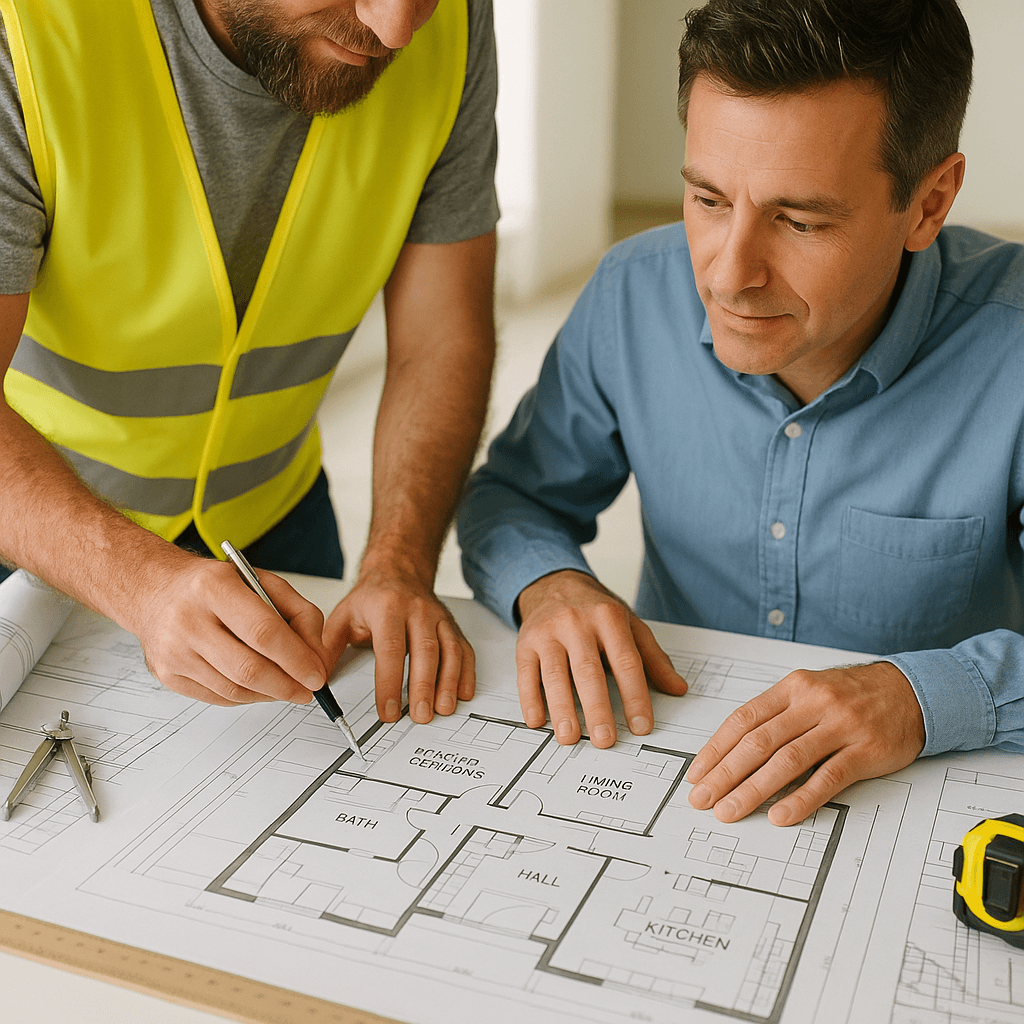
A well-designed set of plans is not just about how a home looks. It determines how the structure comes together, how materials perform, and how the space actually functions once it is built.
That is where designing with a builder's perspective changes everything.
At Masterwork, we operate as a residential design studio grounded in construction experience. Our work is structured across residential design and documentation, boutique surface systems, and outdoor living environments, allowing us to approach each project as a cohesive whole rather than a collection of disconnected decisions.
Understanding Your Lifestyle Before Drawing the First Line
The most consequential decisions in custom home design happen before a single line is drawn. Yet many homeowners begin the process backward, starting with inspiration images rather than a rigorous examination of how they actually live.
Successful floor plans do not begin with aesthetics. They begin with patterns: how a home functions day to day, how people move through it, and how those patterns evolve over time.
These are not design details. They are quality-of-life decisions.
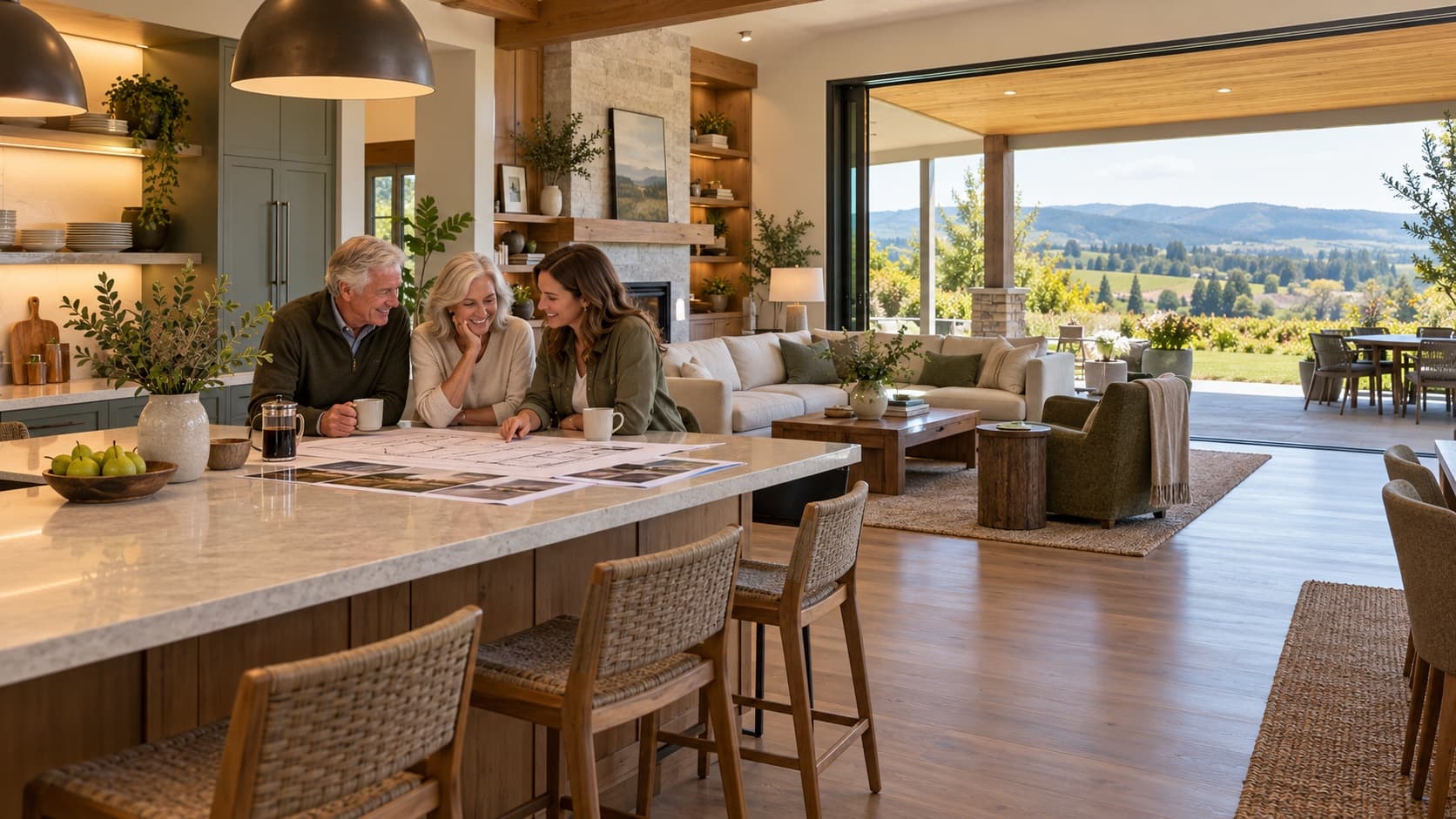
The process begins with the right questions. How do you live day to day? Do you work from home? Do you entertain often? Will aging parents need main-floor access? Are young children growing into teenagers with different needs? In the Willamette Valley, we also consider how indoor and outdoor spaces function together across the seasons.
A well-designed home is not based on a collection of ideas. It is built around a clear understanding of the people who will live in it. When that foundation is established early, every design decision that follows becomes more intentional, more efficient, and far more effective once the home is built.
Integrating Cost Intelligence Early in the Design Process
One of the most expensive mistakes in custom home design is discovering cost implications after the design is complete. We have seen projects where homeowners fully commit to a floor plan, only to learn during estimating that the design exceeds their budget.
Design and cost are not separate phases. Every decision made on paper carries a direct impact on structure, labor, and materials. When we propose a vaulted ceiling, adjust a roofline, or introduce a structural span, we are simultaneously considering how it will be framed, what it will cost, and how it will be built in the field.
A well-designed home aligns design intent with financial reality from the outset. That does not limit creativity. It focuses it. A thoughtfully planned 2,800-square-foot home will consistently outperform a poorly planned 3,200-square-foot home in both cost and livability.
Material selection is another critical point of alignment. Through our work with microcement, Venetian plaster, and specialty coatings, we understand how materials behave beyond the showroom. When materials are integrated into the design early, they enhance both the quality and efficiency of the project.
When cost intelligence is part of the design process from the beginning, projects move forward with clarity. Decisions are made once, not revisited under pressure.
Smart Space Planning That Maximizes Every Square Foot
Square footage is expensive, especially in the Willamette Valley, where quality custom construction often ranges from $350 to $550 per square foot. Yet we routinely see homes that feel inefficient despite their size, with square footage allocated to areas that add cost without improving how the home lives.
The most common issue is circulation space. Hallways, oversized transitions, and redundant entries can quietly consume a significant portion of a home footprint. Through careful adjacency planning and more intentional layouts, that space can be reclaimed and put toward areas that actually improve daily living.
Smart space planning is about how rooms relate to each other. Bedrooms grouped efficiently reduce unnecessary corridors. Kitchens positioned to connect naturally to living and outdoor spaces improve function without adding square footage.
Vertical space is another area where thoughtful planning makes a measurable difference. A more disciplined approach calibrates ceiling heights based on use: higher ceilings in public spaces where volume enhances experience, and more restrained proportions in private spaces where comfort and scale matter.
Outdoor spaces are frequently underutilized because they are treated as additions rather than extensions of the home. By designing outdoor environments as part of the overall plan, considering coverage, orientation, and access, we create spaces that function as true extensions of the home.
Well-planned homes do not rely on size to feel generous. They rely on clarity: spaces that are intentional, efficient, and designed to support how people actually live.
Future-Proofing Your Custom Home Design
A well-designed home should serve how you live today while remaining flexible for how life evolves over time. That balance requires discipline: the ability to prioritize what matters now without overcommitting to decisions that limit future use or broader appeal.
Future-proofing begins with structure. Thoughtful planning of floor systems, roof framing, and key load paths can allow for future modifications with minimal disruption.
It also extends to how spaces are used over time. A home office may later become a bedroom. A bonus room may shift to a secondary living space. Designing with flexible room functions creates a home that adapts without requiring major renovation.
Main-level living and long-term accessibility are also important considerations, particularly as homeowners plan to stay in their homes longer. This does not require designing for a specific future condition, but it does mean incorporating simple, forward-thinking decisions.
At Masterwork, future-proofing is not about overbuilding. It is about designing with foresight. When structure, layout, and material decisions are made with long-term use in mind, the result is a home that performs well over time, adapts to changing needs, and holds its value without requiring constant modification.
If you are planning a custom home or significant remodel, the most important decisions you will make happen long before construction begins. The difference between a project that feels resolved and one that requires constant adjustment is almost always determined in the design phase.
If you are ready to approach your project with that level of intention, we invite you to begin the conversation.