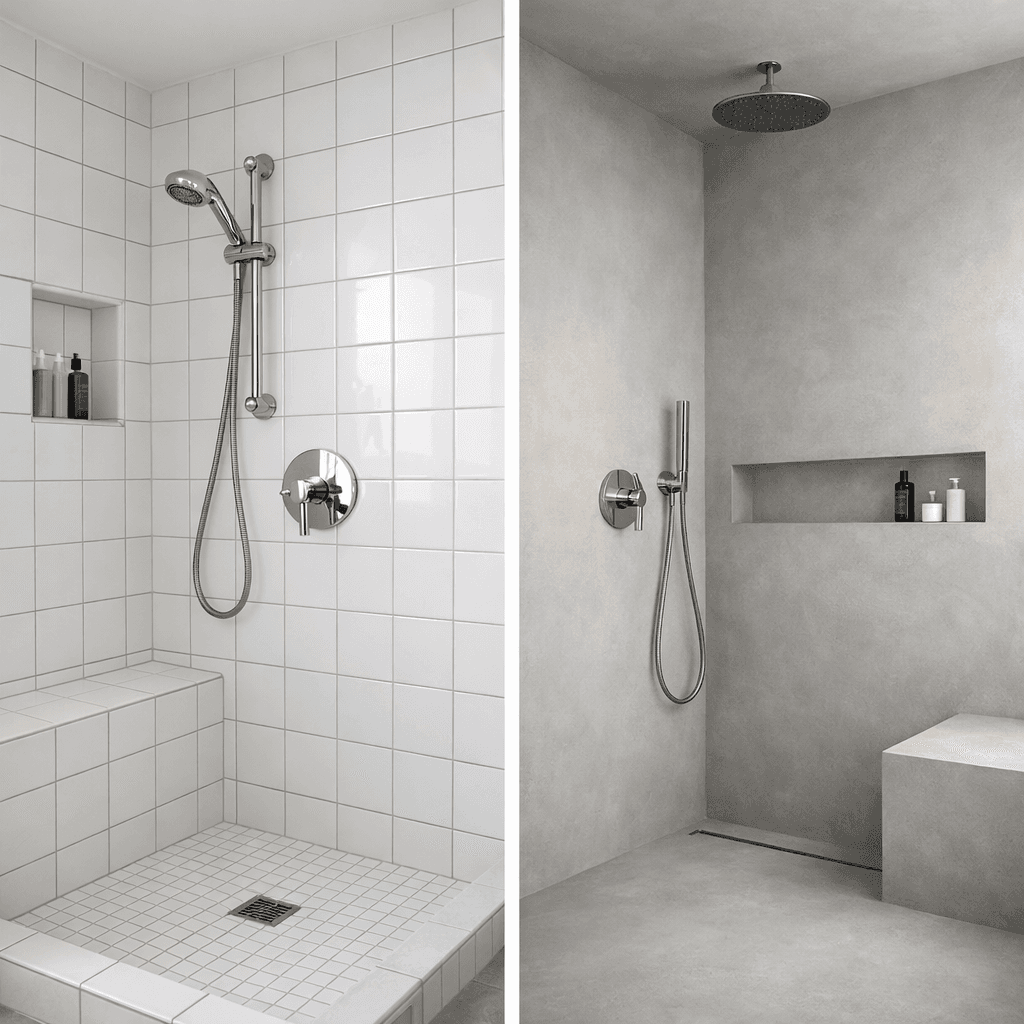
Most homeowners approach a bathroom remodel assuming tile is the default. It is familiar, widely available, and easy to visualize. But in recent years, an alternative has gained traction: microcement.
At a glance, both can achieve a clean, modern aesthetic. In practice, they perform very differently. Understanding those differences early can significantly impact the longevity, maintenance, and overall feel of your space.
What Is Microcement?
Microcement is a thin, cement-based coating applied over a prepared substrate to create a continuous, seamless surface. Unlike tile, it does not rely on grout lines. The result is a monolithic finish that can be used across walls, floors, and even shower pans.
From a design perspective, microcement offers a level of continuity that tile cannot. Surfaces feel connected rather than segmented, and the space reads as more refined and intentional.
Where Tile Still Makes Sense
Tile remains a strong and practical option in many applications. It offers a wide range of styles, is relatively straightforward to install, and performs well when properly detailed.
However, tile systems rely heavily on execution. Grout joints, transitions, and waterproofing layers all introduce potential points of failure. Over time, grout can discolor, crack, or require maintenance, particularly in high-use areas like showers.
We have seen many bathrooms where the tile itself holds up well, but the system around it becomes the long-term issue.
The Advantage of a Seamless System
The primary advantage of microcement is continuity. Without grout lines, there are fewer joints to maintain and fewer visual interruptions across the surface.
In a shower application, this becomes especially valuable. A properly installed microcement system creates a seamless wet environment that feels closer to a European-style wet room than a traditional compartmentalized shower.
- Clean transitions from wall to floor
- Integrated niches without visual breaks
- A more cohesive, architectural finish
It also works well in remodel situations where removing existing materials is costly or disruptive, as microcement can often be applied over properly prepared substrates.
Where Microcement Requires Discipline
Microcement is not a shortcut. It is a system that demands precision.
Surface preparation, waterproofing, and application technique are critical. Unlike tile, where small inconsistencies can sometimes be absorbed by grout lines, microcement exposes everything. The substrate must be stable, transitions must be intentional, and installation must follow a disciplined process.
We have seen projects where microcement was applied without proper preparation, leading to cracking or adhesion issues. When installed correctly, it performs exceptionally well. When shortcuts are taken, problems follow.
Cost Considerations
Microcement is often comparable to, or slightly higher than, a well-executed tile installation, especially when accounting for labor and detailing.
However, cost should be evaluated in terms of system performance, not just initial installation. Reduced maintenance, fewer failure points, and a more refined finish often justify the investment over time.
How This Fits Into the Overall Design
Material selection should not happen in isolation. The choice between tile and microcement should be informed by the broader design of the home.
At Masterwork, we integrate surface systems into the design process early, alongside layout, lighting, and structure, so that materials support the overall vision rather than being applied at the end.
A microcement shower works best when paired with a cohesive palette, intentional lighting, and a layout that allows the material to read continuously.
Making the Right Choice for Your Project
There is not a universal answer. Tile remains a reliable and flexible option. Microcement offers a more refined, seamless alternative when the project and installation approach support it.
The key is understanding how each system performs, not just how it looks.
Closing
If you are planning a bathroom remodel or considering a shift toward more refined surface systems, the material decision should be made early, alongside the design of the space itself. At Masterwork, we approach surface systems as part of a larger design strategy, ensuring they are both visually intentional and built to perform.