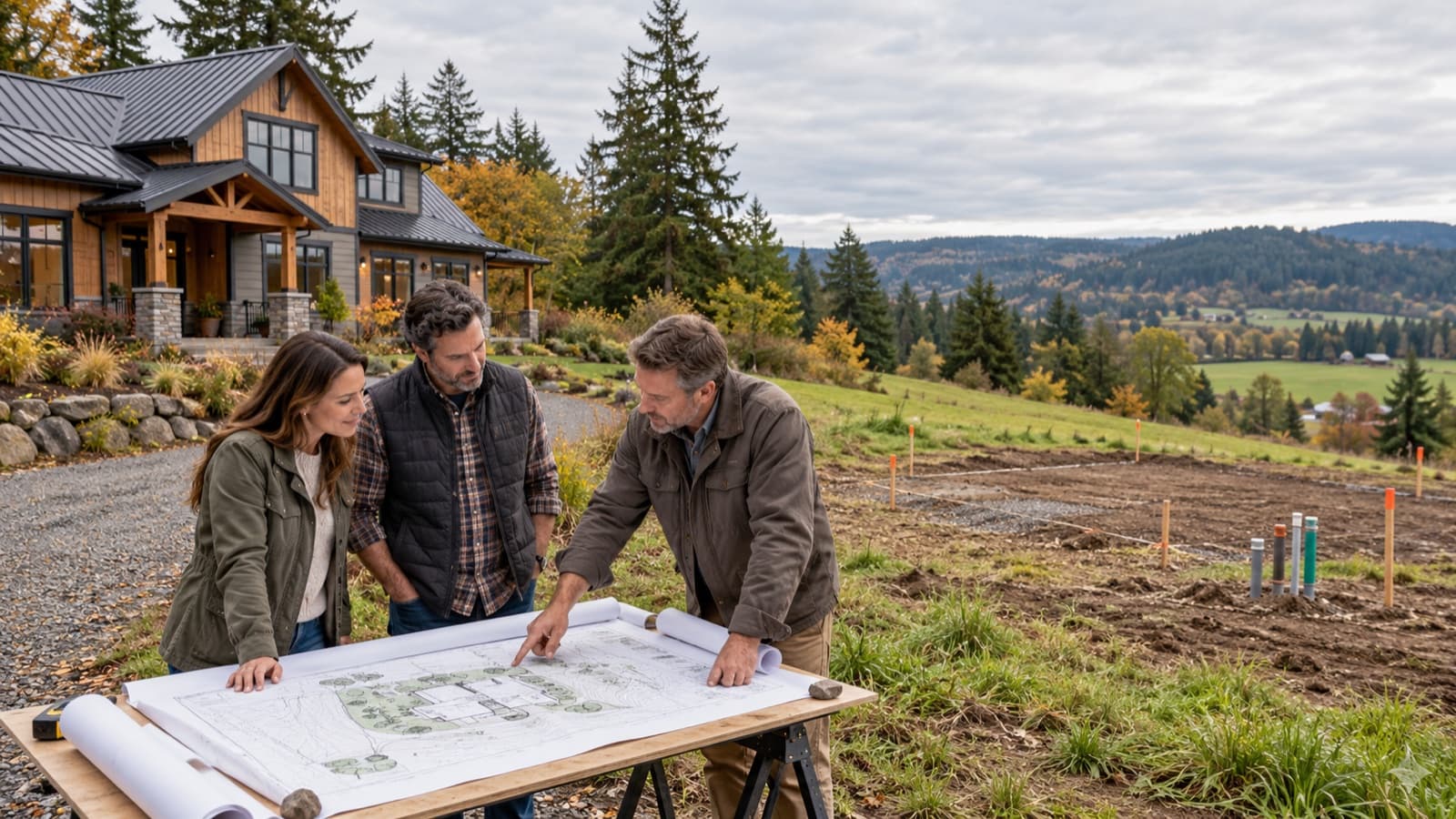
Before you decide where the kitchen goes, you need to understand what the land is trying to tell you.
Many homeowners begin a custom home or major remodel by thinking about rooms. They picture the primary suite, the kitchen, the garage, the great room, or the outdoor living area. Those decisions matter, but they should not be made in isolation.
The site has its own logic. It has sun, slope, access, drainage, views, privacy, utilities, trees, setbacks, easements, and permitting constraints. If those conditions are ignored early, the home may still look good on paper, but it can become more expensive, less comfortable, harder to permit, and less connected to the place it was built for.
A better home starts by studying the land before locking in the floor plan.
The Site Is Not Just Where the Home Goes
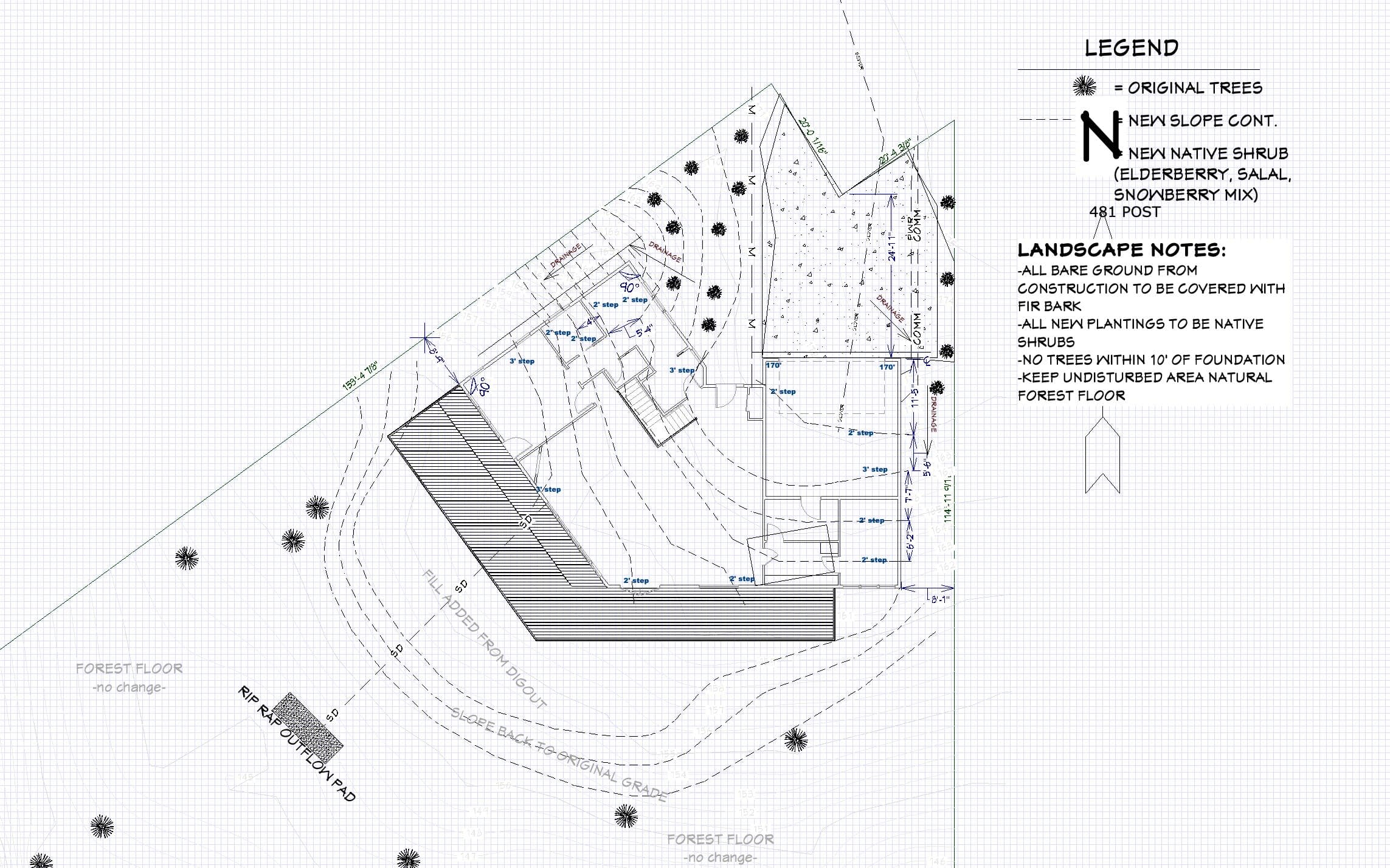
A site plan is more than a drawing that shows the house on the property. It is the first real conversation between the design and the land.
It helps answer practical questions before they become expensive questions. Where should the driveway enter? How does water move across the property? Where does the grade need to change? What trees, views, or natural features should be protected? Where can the home sit within setbacks and local requirements? How will outdoor living connect to the interior?
These are not secondary details. They shape the experience of the home every day.
When site planning happens early, the floor plan can respond to the property instead of being forced onto it later.
A Floor Plan Alone Can Miss the Bigger Picture
Floor plans are easy to get excited about because they feel tangible. You can count bedrooms, measure the kitchen, imagine furniture, and compare layouts. But a floor plan without site context can create false confidence.
A plan may look efficient until the driveway requires too much grading. A room may seem perfect until it faces the wrong view or takes harsh afternoon sun. A garage may seem convenient until it conflicts with slope, drainage, or utility routes. An outdoor living area may look generous until it sits in the wrong place for privacy or weather.
These issues are easier to solve at the beginning than after the design is already emotionally locked in.
Good Site Planning Protects the Budget
Site decisions can quietly become some of the biggest cost drivers in a custom home or remodel.
Driveway length, excavation, retaining walls, drainage, utility connections, septic placement, tree removal, fire access, and foundation design can all affect the budget before the home itself is fully considered.
That is why it is dangerous to design the house first and study the site later. By the time the real site costs appear, the homeowner may already be attached to a plan that is fighting the property.
A thoughtful site plan helps align the dream with the buildable reality. It does not remove every unknown, but it gives the design a better financial foundation from the start.
The Best Views Are Not Always Obvious
A property often has more than one view worth considering.
There may be a distant view, a private garden view, a protected tree canopy, a pool courtyard, or a quieter side of the property that feels better than the most obvious direction. There may also be views you want to avoid: neighboring windows, service areas, road exposure, or harsh western sun.
Good site planning studies those relationships before the layout is finalized. It helps decide where rooms should open, where windows should frame the land, and where walls or landscaping should create privacy.
That is how a home begins to feel like it belongs on the property rather than simply occupying it.
Outdoor Living Should Be Planned With the House
Outdoor living is often treated as a later phase, but it should be considered early.
Patios, pools, outdoor kitchens, shade structures, fire features, paths, and landscape areas all depend on how the home sits on the site. If they are planned after the home is already fixed, they may feel disconnected or forced into leftover space.
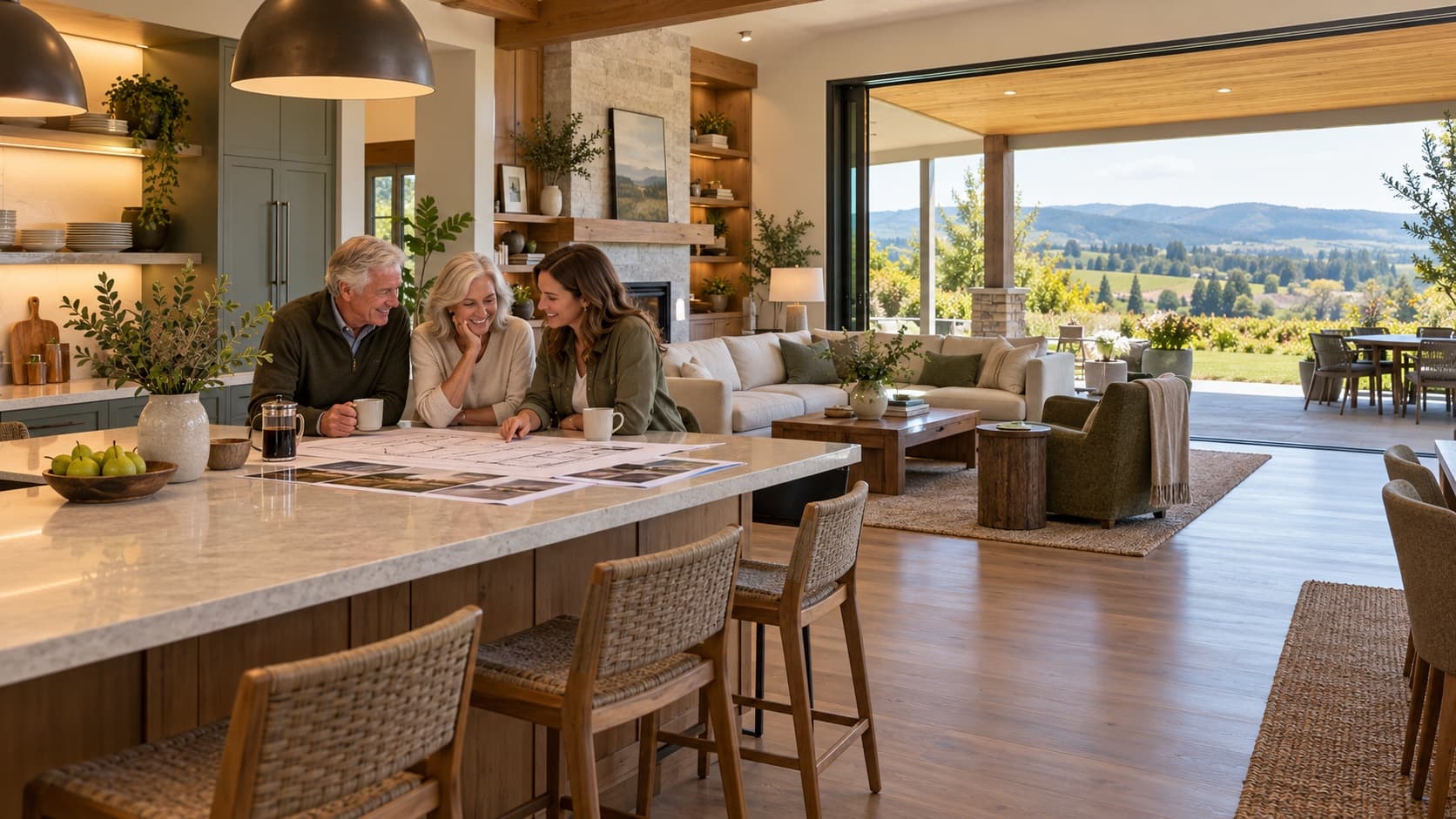
When the site plan is part of the early design work, the indoor and outdoor spaces can support each other. The kitchen can open toward the right patio. The pool can relate to the main living areas. Shade can be planned intentionally. Circulation can feel natural instead of added later.
That is especially important for homes where the exterior is a major part of daily life.
Permitting Starts With Real Site Conditions
Permitting offices do not only review the rooms inside a home. They review how the project relates to the property.
Setbacks, grading, drainage, access, utilities, tree protection, environmental restrictions, septic areas, and local zoning requirements can all affect whether a plan moves cleanly through review.
If those items are studied late, they can trigger redesign, delay, or budget changes. If they are studied early, the design team can make smarter decisions before the plan becomes harder to change.
This is another reason site planning should happen before the floor plan is treated as final.
The Land Should Shape the Home
The best custom homes do not feel generic. They feel specific.
They sit well on the land. They make sense from the driveway. They protect privacy where it matters. They open toward the best light and views. They make outdoor living feel natural. They manage slope, drainage, and access without making those technical requirements dominate the experience.
That kind of result does not usually come from starting with a stock floor plan and adjusting it later. It comes from understanding the site first, then allowing the home to take shape around the opportunities and constraints already present.
Start With the Property, Then Design the Home
If you own land or are considering a major remodel, the first step should not be rushing into a finished floor plan. The first step should be understanding what the property is asking from the design.
Where should the home sit? How should it be approached? What should it protect? What should it reveal? What parts of the site create cost, and what parts create value? Those questions help the design become more practical and more personal at the same time.
A strong site plan gives the floor plan a reason to be what it is.
Closing
A custom home should not be designed as though the land is blank. The site already contains information that can make the project better if it is studied early enough.
At Masterwork, we begin by looking at the whole property, not just the rooms inside the house. Site planning helps align design, budget, permitting, and daily living before the project becomes harder to change.
Before the floor plan is final, listen to the land. The best homes usually do.