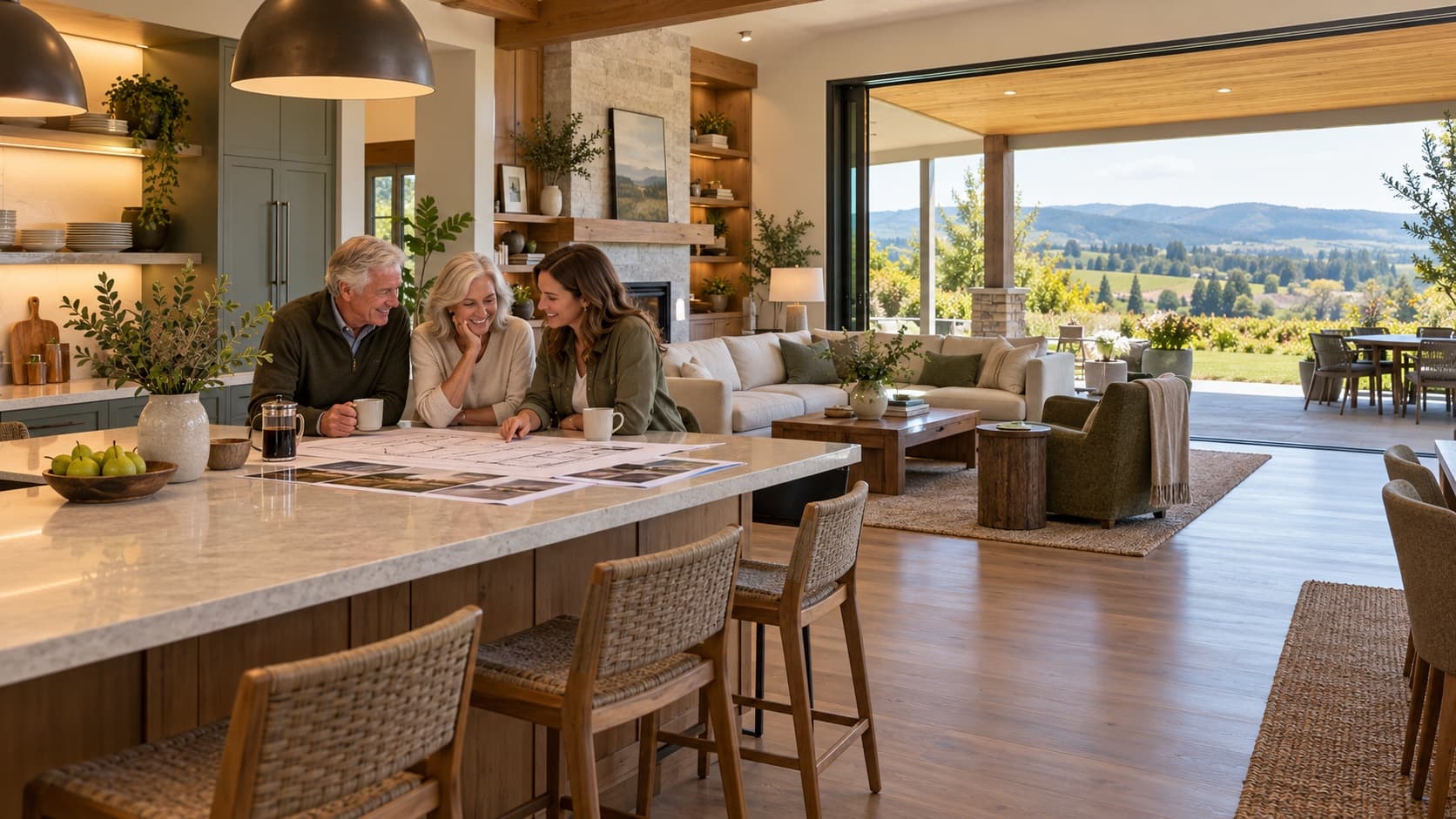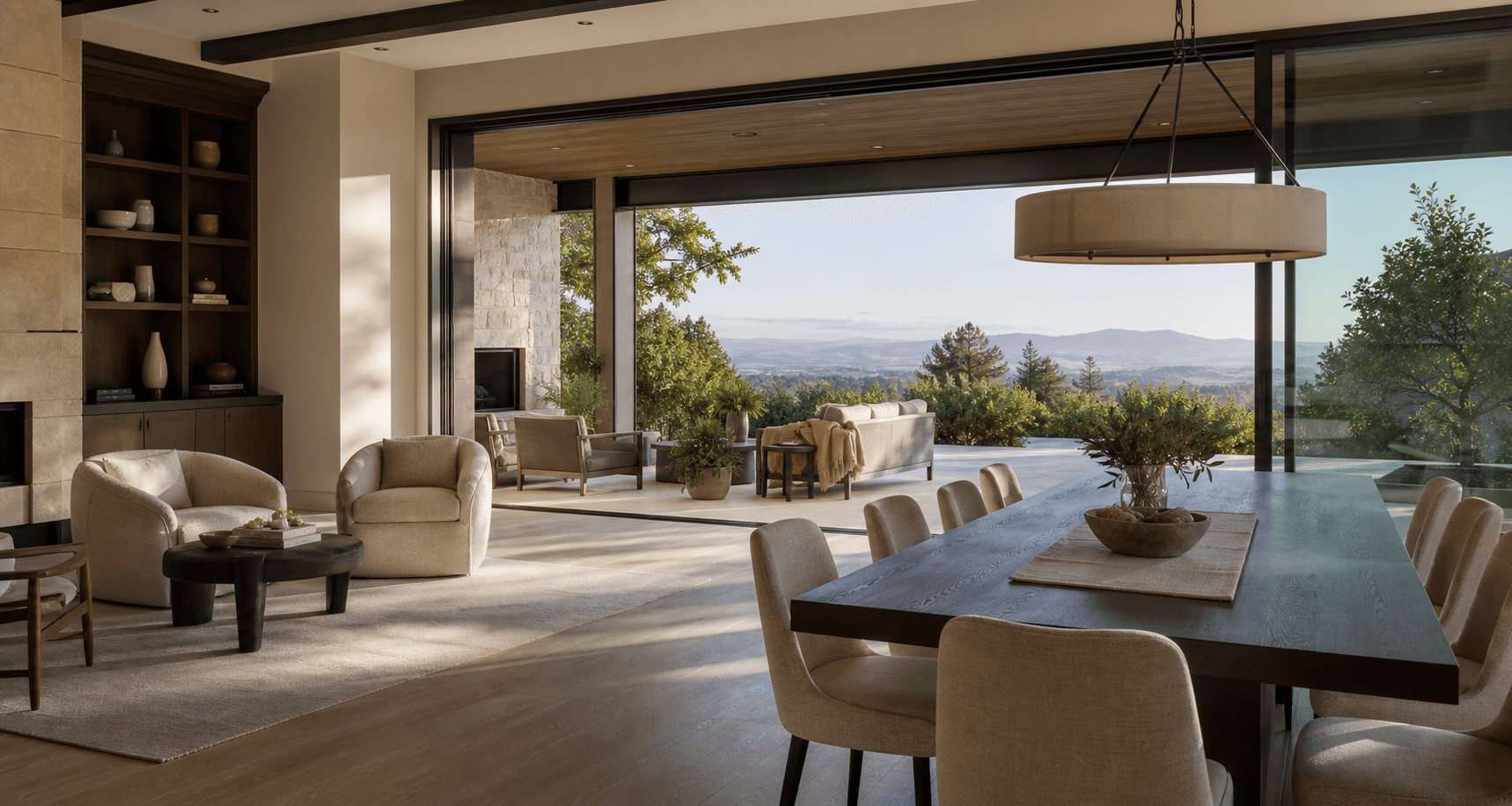
A home can be expensive without feeling custom.
That may sound surprising, but it happens often. A project can include costly finishes, large rooms, impressive appliances, custom cabinetry, and luxury materials, yet still feel like the pieces were assembled instead of designed.
The difference is intention.
A truly custom home feels specific to the land, the people living in it, and the way each space is meant to function. It does not rely on expense alone. It relies on decisions that support one another: proportion, light, movement, material continuity, outdoor connection, storage, privacy, and the small details that make daily life feel considered.
That is what separates a home that simply costs more from a home that feels deeply resolved.
Expensive Finishes Do Not Automatically Create a Custom Home
Luxury materials can elevate a home, but they cannot fix a weak plan.
Stone, tile, wood, plaster, lighting, hardware, and cabinetry all matter. But if the rooms feel awkward, the circulation is confusing, the ceiling heights are wrong, or the outdoor spaces feel disconnected, the home will still feel incomplete.
This is why a custom home should not begin with a list of expensive selections. It should begin with the experience the home needs to create.
How should the entry feel? Where should your eye go when you walk in? How should the kitchen connect to the living space? Where does morning light matter? Where do you need privacy? What views should be framed, and what should be screened?
When those questions lead the design, the materials have a purpose. They become part of the home rather than decoration added on top of it.
Proportion Is One of the Quietest Forms of Luxury
A room does not have to be oversized to feel generous.
Some of the best spaces feel custom because their proportions are right. The ceiling height fits the room. The windows relate to the walls. The openings feel balanced. Built-ins have the right depth. Furniture can be placed naturally. Nothing feels squeezed, and nothing feels unnecessarily inflated.
Poor proportion can make even expensive spaces feel uncomfortable. A great room can feel cold if it is too tall without enough warmth or detail. A hallway can feel like wasted space if it is too wide without a reason. A bathroom can feel less refined if every fixture is fighting for attention.
Good proportion is not always the first thing a homeowner names, but it is often what they feel. It creates calm, confidence, and a sense that the home was thoughtfully composed.
A Custom Home Responds to the Site
A home feels more custom when it belongs where it sits.
The land should influence the design. Sun exposure, slope, views, privacy, access, wind, trees, neighboring homes, outdoor living, and drainage all shape how the home should be planned.
When a floor plan is forced onto a property, the result can feel generic even if the finishes are expensive. When the home responds to the site, the spaces begin to feel more natural. Windows frame the right views. Patios sit where they will actually be used. The driveway approach makes sense. Outdoor rooms connect to the interior without feeling like an afterthought.
That site-specific thinking is one of the strongest signals of a true custom home.
Livability Is More Important Than Showmanship
A home should impress, but it also has to work.
That means daily routines should be considered before the design is locked in. Where do groceries land? Where do shoes, bags, pool towels, cleaning supplies, seasonal items, and tools go? How does the kitchen function during a normal weekday and during a gathering? Can guests move naturally through the home without interrupting private spaces?
These questions may not feel glamorous, but they are often what make a home feel truly custom. The best homes support daily life so quietly that the homeowner does not have to think about it.
A beautiful space that solves real life well will age better than a dramatic space that creates friction every day.
Material Continuity Makes a Home Feel Resolved
A custom home does not need a different statement in every room.
In many cases, restraint is what makes the design feel more expensive. Repeating a thoughtful palette of wood, stone, plaster, metal, tile, and cabinetry finishes can make the whole home feel connected. The goal is not sameness. The goal is continuity.
When each room has a completely separate material story, the home can begin to feel fragmented. When materials are carried through with intention, the home feels calmer and more cohesive.
This is especially important in open living areas, indoor-outdoor spaces, bathrooms, kitchens, and primary suites, where transitions are highly visible.
Details Should Feel Built In, Not Added Later
Details are where many custom homes reveal themselves.
The best details do not scream for attention. They solve something. A niche is placed where it is actually useful. Lighting is layered before the ceiling is finished. Cabinetry aligns with architecture instead of fighting it. Transitions between materials are planned. Outdoor thresholds feel deliberate. Hardware and fixtures support the larger design instead of becoming isolated upgrades.
These decisions take planning. They are difficult to add convincingly after construction has already moved past them.
When details are considered early, the finished home feels integrated. That is often what people mean when they say a home feels custom, even if they cannot point to one specific feature.
Restraint Can Make the Expensive Choices Matter More
Not every surface needs to be the focal point.
One of the most important parts of high-end design is knowing where to spend attention and where to let the home breathe. If every element is competing, the expensive choices lose impact. A custom home should have hierarchy.
That might mean a strong fireplace wall balanced by quieter surrounding materials. It might mean a sculptural stair with restrained flooring. It might mean an elegant kitchen where the cabinetry, stone, lighting, and hardware support one another instead of each trying to dominate.
Restraint is not about making a home plain. It is about making the right decisions more visible.
Budget Should Be Used Intentionally
A thoughtful custom home is not defined by spending everywhere.
It is defined by spending in the places that matter most to the design and to the people who will live there. Some investments affect daily life every day: layout, natural light, windows, outdoor living, storage, kitchen function, shower design, durable surfaces, and quality installation. Other upgrades may be beautiful but less central to how the home actually feels.
A strong planning process helps separate what is essential from what is optional. It gives the homeowner a clearer way to decide where the budget should lead and where restraint will produce a better result.
That is how a home becomes more than a collection of upgrades.
A Custom Home Should Feel Inevitable
The best custom homes often feel like they could not have been designed any other way.
The rooms fit the site. The materials support the architecture. The details belong to the way the home is built. The outdoor spaces feel connected. The plan supports real life. Nothing feels random, and nothing feels like it was chosen only because it was expensive.
That kind of result takes more than taste. It takes a clear process, careful planning, and a willingness to make decisions in the right order.
Closing
A home feels custom when it is designed around the site, the budget, the materials, and the people who will live there. It feels expensive only when the cost is visible. It feels custom when the intention is visible.
At Masterwork, we believe the strongest homes are not built by stacking upgrades. They are shaped through thoughtful planning, proportion, restraint, material continuity, and details that support daily life.
The goal is not simply to build something impressive. The goal is to build something that feels considered from the first step inside to the way it lives years later.